A Tested Recipe
Century Egg and Lean Pork Congee (Pidan Shourou Zhou).
Cantonese congee with century egg and lean pork — the kind you get at dim sum breakfast spots. Slow-cooked rice breaks down into a thick, creamy porridge. Good for any meal, not just breakfast.
By jackTao · Oct 12, 2025

Hands in the dough?
Enter Cook Mode for a focused, full-screen view of the steps — no distractions, larger type, screen stays awake.
The Mise en Place
Ingredients
Adjust portions
Main Ingredients
- 150 ml rice (about 3/4 cup)
- 1 liter drinking water
- 100 g lean pork
- 2 century eggs (pidan or preserved eggs)
- 1 thumb-sized piece fresh ginger
Garnishes
- 1 stalk scallion (green onion)
- 1 sprig cilantro (coriander)
- 4 leaves lettuce
Seasonings
- 5 ml soy sauce
- 5 ml oyster sauce
- 2 g salt
- 1 g white pepper powder
- 10 ml cooking oil
The Method
Instructions
- Step 1
- Step 2
- Step 3
- Step 4
- Step 5
Prepare Main Ingredients
- Rinse the rice thoroughly and place it in the rice cooker inner pot.
- Add 1 liter of drinking water to the rice cooker.
- Rinse the lean pork and pat dry. Add 10ml cooking oil and massage it into the meat until well coated. Place the pork in the rice cooker.
- Peel the century eggs and rinse them. Cut each egg in half. Separate the egg whites from the yolks. Roughly chop the egg whites into chunks and mash the yolks. Add both to the rice cooker.
- Wash and peel the ginger, removing any dried or discolored parts. Cut into thin julienne strips and add to the rice cooker.
- 01
Prepare Main Ingredients
- Rinse the rice thoroughly and place it in the rice cooker inner pot.
- Add 1 liter of drinking water to the rice cooker.
- Rinse the lean pork and pat dry. Add 10ml cooking oil and massage it into the meat until well coated. Place the pork in the rice cooker.
- Peel the century eggs and rinse them. Cut each egg in half. Separate the egg whites from the yolks. Roughly chop the egg whites into chunks and mash the yolks. Add both to the rice cooker.
- Wash and peel the ginger, removing any dried or discolored parts. Cut into thin julienne strips and add to the rice cooker.
- 02
Prepare Garnishes
- Wash the scallions, remove the roots and any yellowed or dried parts. Finely chop and place in a small bowl.
- Wash the cilantro, remove the roots and any yellowed or dried parts. Finely chop and place in a small bowl.
- Wash the lettuce leaves, remove any tough stems and discolored parts. Chop into small pieces and place in a small bowl.
- 03
Prepare Seasoning Sauce
- In a small bowl, combine soy sauce, oyster sauce, salt, and white pepper powder.
- Stir well until fully mixed. Set aside.
- 04
Cook the Congee
- Set the rice cooker to congee/porridge mode and start cooking.
- Let it cook until the cycle is complete and the congee is thick and creamy.
- 05
Final Assembly
- When the congee is done, blanch the chopped lettuce separately in hot water for a few seconds.
- Open the rice cooker lid. Add the blanched lettuce, scallions, and cilantro. Stir well to combine.
- Pour in the prepared seasoning sauce and mix thoroughly.
- Serve hot immediately.
Cook's Notes
Notes
💡 TIP: Wear disposable gloves when measuring and handling ingredients for better hygiene. Wash all vegetables in advance and set them aside.
Note Nº 01
This recipe makes 1-2 servings. Scale up proportionally for more servings.
Note Nº 02
Century eggs (pidan or preserved eggs) are also known as thousand-year eggs or hundred-year eggs. They have a distinctive dark color and creamy texture with a unique savory flavor.
Note Nº 03
Adding cooking oil to the pork before cooking helps keep it tender and prevents it from becoming tough during the long cooking process.
Note Nº 04
Separating the egg whites and yolks allows for better texture distribution - the chopped whites provide visual appeal while the mashed yolks blend into the congee for extra creaminess.
Note Nº 05
For meal prep: You can prepare the main ingredients the night before. Set the rice cooker to keep-warm mode overnight, then add the garnishes and seasonings in the morning for a quick breakfast.
Note Nº 06
The congee should be thick and creamy with a porridge-like consistency. If it's too thick, add a little hot water. If too thin, let it cook longer.
Note Nº 07
Fresh garnishes (scallions, cilantro, lettuce) added at the end provide a fresh contrast to the rich, savory congee.
Note Nº 08
Blanching the lettuce briefly softens it while maintaining its bright green color and fresh texture.
Note Nº 09
This dish is a staple of Cantonese cuisine and Hong Kong breakfast culture, often served at dim sum restaurants and congee shops.
Note Nº 10
From the same pantry
You might also cook.
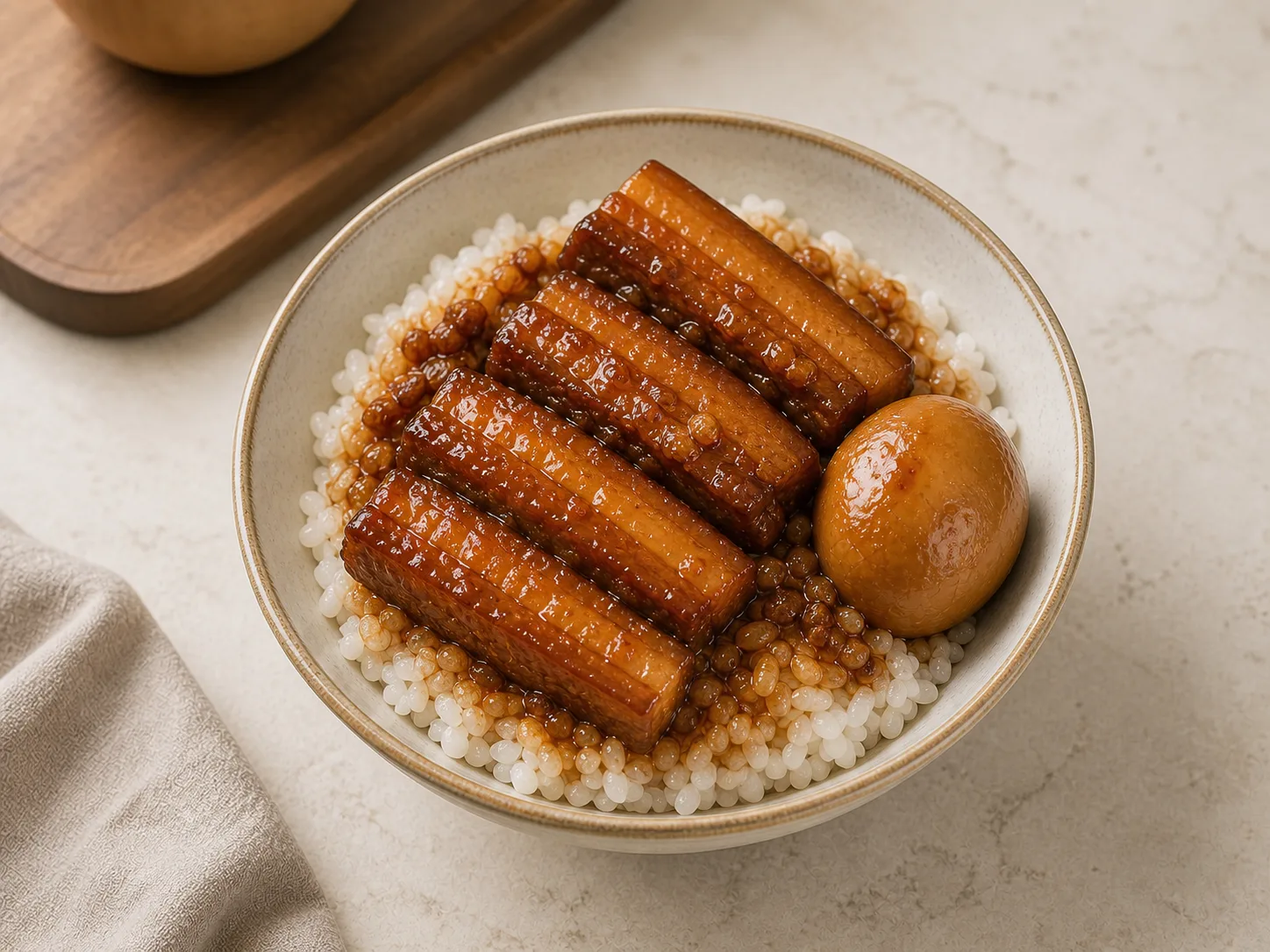
Taiwanese Braised Pork Rice (Lu Rou Fan)
A comforting Taiwanese rice bowl with tender strips of pork belly slowly braised in soy sauce, rice wine, aromatics, warm spices, and caramelized rock sugar until the sauce turns glossy and amber.

Lao Gan Ma Tossed Noodles
Boil noodles, add Lao Gan Ma and soy sauce, mix. That's it. The lazy meal every Chinese student knows by heart. Three ingredients, five minutes, surprisingly satisfying.

Chenpi Pork Rib Soup
Slow-simmered Cantonese soup with pork ribs and aged tangerine peel (chenpi). The longer the chenpi has aged, the better it tastes. A staple in Guangdong households, especially during dry weather.